Which Flange Standard Should I Choose?
ASME, EN, DIN, JIS. Pick one wrong and your flanges will not bolt together. The bolt holes sit in the wrong place, the gasket never seals, and your crew stands around while the schedule slips. We see it happen on jobsites every year.
The good news: the choice is simpler than it looks. It comes down to where your project is, what industry you work in, and how much pressure and heat the line will see. This guide walks through each one, the way we explain it to buyers who call our shop.

Start With Geography: The Major Global Standards
Every flange standard grew up in a home market. That home market still tells you most of what you need to know.
North America: ASME / ANSI
The key standards here are ASME B16.5 for sizes up to 24 inches and ASME B16.47 for larger diameters. Pressure is rated in classes: Class 150, 300, 600, 900, 1500, and 2500. These flanges dominate in the USA, Canada, and Latin America. You will also find them on oil and gas projects all over the world, no matter where the project sits on the map. If your customer is an American oil company building a plant in the Middle East, they will almost always spec ASME.
Europe: EN / DIN
EN 1092-1 is the current European standard. It largely replaced the old national standards, including the German DIN codes that many people still use as shorthand. Pressure is rated as PN, which stands for Pressure Nominal in bar: PN 6, PN 10, PN 16, PN 40, and so on. These flanges rule the European Union and the UK, and they are common in Africa and parts of Asia too. One thing to remember: Europe’s PED pressure equipment rules push you toward EN flanges on regulated jobs.
Japan and East Asia: JIS / KS
JIS B2220 covers Japanese flanges, and KS B1503 is the Korean version. Pressure is rated in K: 5K, 10K, 20K. You will see these flanges in Japan and South Korea, and across East and Southeast Asian shipyards. Marine work is the big one. If you are building or repairing ships in that part of the world, your suppliers will quote JIS by default.
Comparing the Big Three: ASME vs EN vs JIS
Buyers ask us the same question all the time: “Class 150 is low pressure, PN 16 is low pressure, so they should bolt together, right?” No. The pressure may look close on paper, but the bolt circle, the number of bolt holes, and the flange thickness rarely match. You can force it with an adapter flange, but that adds cost, weight, and one more joint that can leak. We make adapters when customers truly need them. We would rather you never need one.
Materials are a different story. The steel grades line up across standards more often than people think. ASTM A105 carbon steel under ASME has a close cousin in EN 10222-2 P245GH. The chemistry and strength are near enough that most mills can certify both. So if you switch standards between projects, your material supply chain usually survives. Your bolt patterns do not.
Here is the quick side-by-side view:

How to Make Your Choice: Four Questions
When a customer calls and asks which standard to buy, we ask four questions. Answer these and the right standard usually picks itself.
1. Where is the project? Local rules often make the decision for you. A regulated pressure system in Germany needs EN flanges to satisfy PED. A plant in Texas runs on ASME. Check the local codes before you check anything else.
2. What industry are you in? Oil, gas, and petrochemical work defaults to ASME almost everywhere. Water treatment and HVAC jobs often run on EN, DIN, or whatever the local standard is. Shipbuilding and marine work lean hard toward JIS. Follow your industry’s habit unless you have a reason not to.
3. What are your operating conditions? Match the pressure rating and temperature rating to your real numbers, not to a guess. A Class 150 flange and a PN 16 flange are not the same thing at 400 degrees, even if both feel “low pressure.” Pull the rating table for your material and check it at your working temperature.
4. Are you expanding an existing system? Then match what is already in the ground. Old plants have old standards, and the cheapest flange is the one that bolts straight onto the existing line. Mixing standards means adapter flanges, custom gaskets, and installers who stop trusting the drawings.
💡 Pro Tip
Before you order, unbolt one flange on the existing line and measure the bolt circle with calipers. Five minutes of measuring beats a truckload of flanges that do not fit.
Watch Out for These Common Pitfalls
Most flange mix-ups we get called about trace back to one of three mistakes.
Facing types that do not match. Raised Face (RF), Flat Face (FF), and Ring Type Joint (RTJ) are not interchangeable. Each standard has its own default facing, and your gasket and mating equipment have to agree with it. An RF flange bolted to a flat-face cast iron pump can crack the pump casing. Check the facing before the purchase order, not after delivery.
Old DIN codes vs new EN 1092-1 codes. People still write “DIN 2633” on inquiry sheets even though EN 1092-1 replaced it years ago. Sometimes the dimensions carry over. Sometimes they do not. When an old drawing says DIN, confirm which modern EN type it maps to before anyone cuts metal.
NPT vs metric threads. Threaded flanges follow the local pipe thread habit. North America runs on NPT. Most of the rest of the world runs on metric or BSP threads. A threaded flange that almost screws on is a threaded flange that will leak.

⚠️ One More Warning: “Close enough” is not a flange standard. If the drawing and the purchase order name two different standards, stop and fix the paperwork before the order ships. Sorting it out on site costs ten times more.
Conclusion and Quick Checklist
The choice of flange standard comes down to three things: where the project is, what industry you are in, and what pressure and heat the line will see. Get those right and the standard picks itself. Get them wrong and you are buying adapters and writing apology emails.
Before you send any inquiry, run through this short list:
Still not sure? Send us the project location, the line size, the pressure, and a photo of the mating equipment if you have one. Our team quotes ASME, EN, and JIS flanges every day, and we will tell you straight which standard fits and why.
Other Types of Flanges

Weld Neck Flanges (WN)
WN flange, also known as a trapped hub flange or high-hub flange, is a high-stress-containing flange.

Slip-on Flanges (SO)
Slip-on flanges, as the name shows, can be easily slipped onto the end of a pipe or fitting and then welded in place.

Socket Weld Flanges (SW)
Socket Weld Flanges (SW) are similar to Slip-on Flanges (SO). The difference is that there is an extra piece in the middle.

Blind Flanges (BF)
Blind flange is also called flange cover. It is a flat, circular plate used to cover the ends of pipes, valves, or joints.
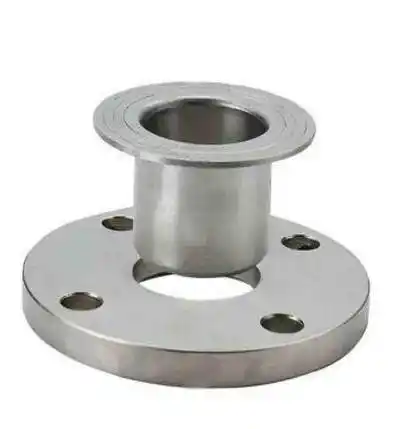
Lap joint flange (LJ)
Consisting of two components: a stub end and a lap joint ring flange. The respective stub end is slid into the flange’s bore, and the stub end is joined to the pipe through butt welding.

Threaded Flanges (TF)
Threaded flanges are pipe flanges with internal threading to match external threads on a pipe.
Author: Lewis Liu
Hello, my name is Lewis Liu, and I’m a professional sales engineer with over a decade of expertise in the flange fittings sector.
I am quite informed about flange selection, installation, and maintenance. I am passionate about providing customers with the greatest solutions for keeping their pipeline systems running smoothly, safely, and dependably.
If you have any queries or concerns concerning flange fittings for your pipelines, whether they are about selection, material choice, specification requirements, or anything else, please contact me at any time. I am dedicated to providing expert advice and assistance to help you make educated decisions and reach your objectives.