The Perfect Fit: A Guide to Choosing the Correct Pipe Flange Size
A flange isn’t just a metal ring. It’s the handshake holding your whole piping system together, and when that grip slips, everything downstream pays for it. Twenty years in this business — making flanges for oil rigs, chemical plants, power stations — has taught us exactly what “close enough” really costs. Leaks. Pressure drops. Shutdowns that weren’t on anyone’s calendar. Repair bills that’ll make your finance team weep. Our engineers check five things on every order before it leaves the building. Here’s what they are.

Know Your Standard Before You Touch a Caliper
Don’t measure a single bolt hole until you know what language your system speaks. The standard drives everything — outer diameter, bolt circle, flange thickness, hub taper. Mix standards and you’re basically forcing a USB-C plug into a micro-USB port. Looks like it might fit right up until it doesn’t.
Here’s what rolls across our shop floor daily:
Pro Tip
Never try to force-mate an ASME flange with a DIN flange. Even if the bolt holes look close, alignment fails under pressure — we get emergency calls every month from sites that tried exactly that shortcut. Match the standard from day one and save yourself the headache.

Pipe Size and Flange Size Aren’t the Same Thing
Even experienced engineers stumble here. A 2″ NPS pipe isn’t actually 2 inches inside or out. Nominal size is basically just a label telling you which flange family to shop.
NPS 2″ = DN 50 | NPS 4″ = DN 100 | NPS 6″ = DN 150
NPS means Nominal Pipe Size, the inch system used mainly in North America. DN is Diameter Nominal, the metric equivalent common in Europe and most of Asia. When an order comes in for DN 50 slip-ons, we know immediately the customer has a 2-inch system, even if they’re halfway around the world.
Then there’s schedule, which controls wall thickness. Same pipe in Sch 40 has a different inner diameter than in Sch 80. That matters for weld neck flanges because the bore must match the pipe ID exactly. Pair a Sch 40 pipe with a flange bored for Sch 80 and you get a step inside the joint. Flow disturbs, debris traps, stress concentrates at that step, and eventually something cracks under cyclic loading. We machine custom bores weekly because someone missed the schedule on the original order.
⚠️Watch Out: Ordering by nominal size alone isn’t enough. Always specify pipe schedule, or at least confirm actual inner and outer diameters. A decent supplier asks before cutting metal.
Pressure Class Is Where the Muscle Lives
The class rating tells you how much pressure the flange holds at a given temperature, and it drives the physical dimensions directly. Higher class means thicker metal, bigger bolts, heavier everything.
Under ASME B16.5, common classes run 150, 300, 600, 900, 1500, 2500. Class 150 covers low-pressure work like water lines and HVAC. Class 2500 is your high-pressure steam in power plants. In our forging shop, a Class 150 weld neck for 4-inch pipe weighs just a few kilograms. The Class 2500 version of that same nominal size? Near forty. That’s raw material difference alone.
285 psi at ambient temp → roughly 150 psi at 500°F (Class 150)
Temperature is the variable too many people forget. Material loses strength when it gets hot — carbon steel, stainless, alloy, each behaves differently under thermal stress. When a customer calls unsure about class selection, our first question is always: “What’s the operating temperature?” Normal temp and the maximum during upset conditions. We need both.
Facing Controls Your Seal
The facing is the surface meeting the gasket. Wrong face type and even a perfectly sized flange leaks. Our finishing department machines three main types:

The Measurements That Matter
Staring at an unmarked flange in a warehouse? Grab a caliper and tape measure. QC checks every one of these before boxing:
Pro Tip
Keep a go/no-go gauge in your toolkit. We’ve watched seasoned technicians burn hours arguing whether bolt hole spacing is 5.875 or 6.000 inches. A simple BCD gauge ends that debate in thirty seconds.
Mistakes That Cost Real Money
Two decades, same mistakes, every industry. These hurt the most:
Get It Right the First Time
Choosing the right flange is straightforward but unforgiving. Standard, size, schedule, pressure class, facing — get those five right and the joint outlasts the pipe around it. Miss one, and you’re scheduling a shutdown.
When in doubt, pull out the ASME B16.5 charts or call your manufacturer’s technical team. Any decent supplier has those charts on hand and can walk you through verification. At our plant, we’d rather spend ten minutes on the phone getting your spec right than have you call back six months later with a leak.
Other Types of Flanges

Weld Neck Flanges (WN)
WN flange, also known as a trapped hub flange or high-hub flange, is a high-stress-containing flange.

Slip-on Flanges (SO)
Slip-on flanges, as the name shows, can be easily slipped onto the end of a pipe or fitting and then welded in place.

Socket Weld Flanges (SW)
Socket Weld Flanges (SW) are similar to Slip-on Flanges (SO). The difference is that there is an extra piece in the middle.

Blind Flanges (BF)
Blind flange is also called flange cover. It is a flat, circular plate used to cover the ends of pipes, valves, or joints.
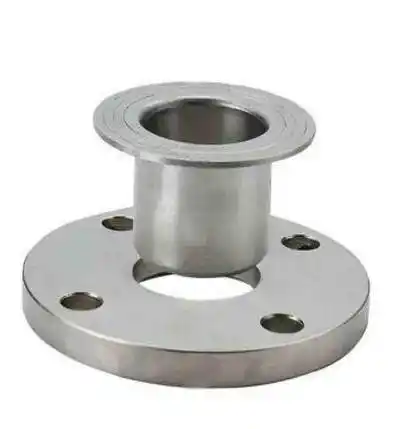
Lap joint flange (LJ)
Consisting of two components: a stub end and a lap joint ring flange. The respective stub end is slid into the flange’s bore, and the stub end is joined to the pipe through butt welding.

Threaded Flanges (TF)
Threaded flanges are pipe flanges with internal threading to match external threads on a pipe.
Author: Lewis Liu
Hello, my name is Lewis Liu, and I’m a professional sales engineer with over a decade of expertise in the flange fittings sector.
I am quite informed about flange selection, installation, and maintenance. I am passionate about providing customers with the greatest solutions for keeping their pipeline systems running smoothly, safely, and dependably.
If you have any queries or concerns concerning flange fittings for your pipelines, whether they are about selection, material choice, specification requirements, or anything else, please contact me at any time. I am dedicated to providing expert advice and assistance to help you make educated decisions and reach your objectives.