How To Choose Pipe Flanges Of Different Materials?
Pipeline flanges are important components that connect various parts of pipelines and are generally used in industries such as petrochemicals, electricity, papermaking, shipbuilding, and natural gas.
When designing pipeline systems, safety must be the primary consideration.
In order to ensure the safe and stable operation of flanges in high temperature, high pressure, and corrosive environments, we must match suitable flange materials with environmental conditions such as medium type, pressure, temperature, etc.
Only in this way, the whole pipeline system can operate more efficient and also extend its service life.

Common flange materials for pipelines
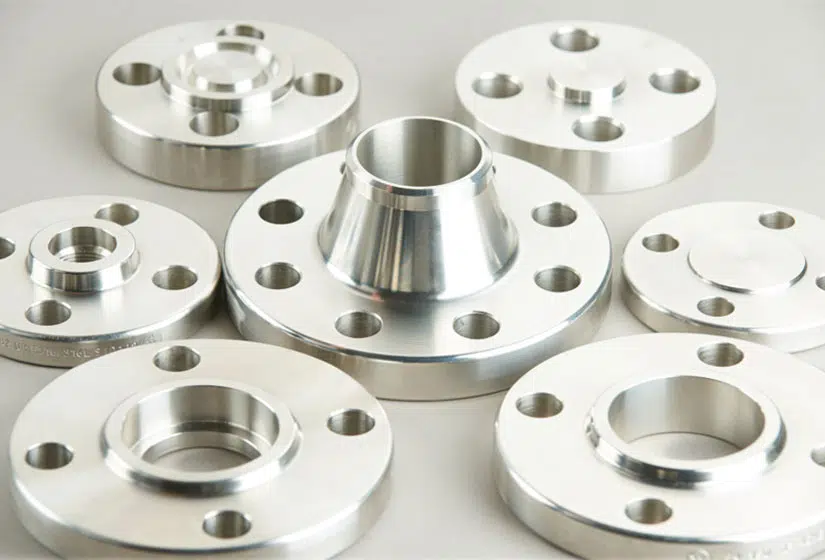
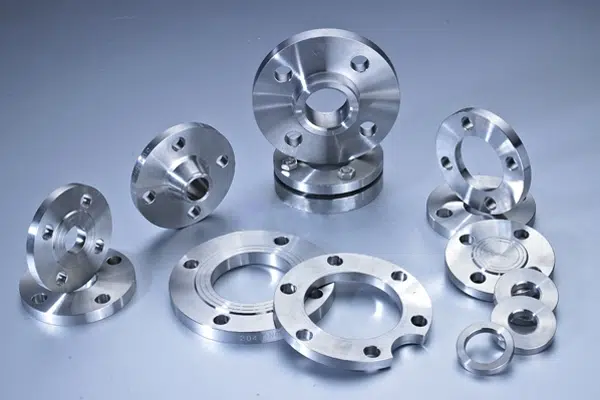
- Stainless steel flanges: Common models include 304, 304L, 316, 316L, and others. These flanges have very good corrosion resistance and high temperature performance. Among these stainless steel flanges, the 316 stainless steel flange contains nickel and molybdenum elements, and is especially good in resisting chloride corrosion and high temperature. It is better than other flange models and often used in harsh environments such as marine and chemical processing fields.
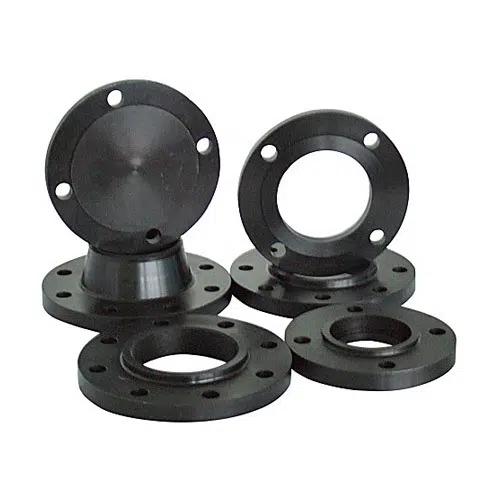
- Carbon steel flanges: Carbon steel flanges are usually made of low-carbon steel such as ASTM A105, which has very high strength and durability, and also the cost is relatively low. So it is widely used in conventional pipeline systems. But carbon steel flanges are easier to get rust, but actually it is not a big problem, we can improve their corrosion resistance and extend service life by doing coating or lining. A105 carbon steel flange can also bear high temperature and high pressure conditions, so this kind of carbon steel flange is widely used in industries like petroleum, natural gas, and power.
- Alloy steel flanges: ASTM A182 F11, F22, F91 and other models of alloy steel flanges have added alloy elements such as chromium and molybdenum to improve their high temperature resistance and corrosion resistance. Alloy steel flanges are very suitable for high-temperature and high-pressure working conditions such as chemical, power generation, nuclear power, and petroleum cracking, and the safety performance is quite high.
- Non-ferrous metal flanges: Non-ferrous metal flanges are made of copper and copper alloys, aluminium, and titanium, which have strong corrosion resistance and can resist seawater and many chemical media, so the durability is much better than ordinary steel. They also have good thermal conductivity, and the heat transfer efficiency is higher than stainless steel, so it is very suitable for heat exchange equipment. Among them, aluminium flanges are light in weight and have natural oxide film, which can provide good moisture and corrosion resistance, so it is suitable for applications like marine and air conditioning systems. Titanium flanges are more excellent in corrosion resistance and high strength, and suitable for very harsh environments such as petrochemical and marine applications. The fatigue resistance and corrosion resistance of non-ferrous metal flanges can ensure the system runs stable for long time.
Considerations when choosing flanges
- Pressure and Temperature Requirements: The first step when selecting material is to confirm the maximum pressure and temperature of the pipeline working condition. Different materials will have different pressure tolerance under different temperature. After careful checking, we should select the material and grade which can meet the highest temperature and pressure requirement. For example, ASTM A105 carbon steel flange can be used for high temperature and high pressure situation.
- Work conditions and medium types: The medium type has very big influence on material selection. When transporting corrosive media (such as acid, alkaline, or seawater), it is better to choose corrosion-resistant materials (such as stainless steel flange, alloy steel flange, or titanium flange); while for normal air or non-corrosive gas pipeline, carbon steel flange can also be considered because the cost is lower. Also need to pay attention to some special conditions, like pulsating flow, abrasive media, and climate condition (such as low temperature brittleness).
- Pipe Compatibility: The selected flange must match with pipe and other accessories (pipes, valves, gaskets, bolts, etc.) in material, connection type, and size. If material is not compatible or expansion coefficient difference is too big, it may cause stress from thermal expansion and contraction, then easily lead to leakage or even damage, which is quite dangerous. Only when flange and pipe system use same or compatible standards and material system, then can avoid safety problem.
- Delivery and Cost: The delivery time and cost of different materials and specifications also need to be considered. Normal carbon steel or stainless steel flanges are easy to get in market and cost-effective, but some alloy materials or large size flanges may need longer production time and higher cost. So besides meeting project budget and schedule, also need to balance performance and cost to make a reasonable and reliable plan.
- Standards and specifications: Flange design and selection should follow relevant national and industry standards. Common flange standards include EN1092-1, ASME B16.5/B16.47, GB, JIS, etc. These standards define size, pressure-temperature rating, material grade and so on. When designing pipeline, should confirm which standard system is used locally, and select strictly according to standard, otherwise may have compatibility problem between different systems.
Common types of pipeline flanges
When choosing flange type, it should be decided based on connection method and pressure rating. Common types include:
- Welding neck flange: The flange is connected to pipeline by butt welding, with long tapered neck, which can provide good strength and rigidity, and also can distribute stress more evenly, so it is suitable for high pressure and high temperature condition.
- Slip-on flange: directly put on the pipe end, then do welding to fix it. Installation is relatively easy, mainly used in medium and low pressure pipeline system.
- Blind flange: a solid flange without center hole, used to seal the end of pipeline or vessel, can be used for pressure test or temporary isolation, also convenient for later maintenance.
- Lap joint flange: composed of flange ring and stub end, the flange itself is not welded to pipeline and can rotate freely to align bolt holes. It is flexible and convenient, often used in condition where need frequent disassembly or easy alignment.
- Socket weld flange: The flange has socket, pipe is inserted into it and then fillet welded. Internal flow is relatively smooth, and it has good performance under high pressure, suitable for small diameter high pressure pipeline.
- Threaded flange: With internal threads, it can be screwed onto external threaded pipe. No need welding, installation is simple, suitable for low pressure or where welding is not convenient.

When selecting flange type, also need to consider pressure class and sealing face type (such as raised face, flat face, or ring type joint), so that it can match gasket well and ensure sealing performance of whole system.
Conclusion
Pipeline Fran plays an extremely important role in the pipeline system, and its choice of materials and types directly determines the safety, stability, and lifespan of the entire pipeline system. Only by combining all the factors described in the article to select the optimal solution can Fran achieve its maximum role-based economic benefits.
As a brand focused on flannel products, YANHAO has always insisted on providing more suitable flannel solutions for different industries starting from practical applications, helping customers ensure performance and safety while also balancing procurement efficiency and cost control.
If you‘re looking for a French product that fits your project needs, YANHAO can provide you with more professional support options and customized services. Please contact us!
Other Types of Flanges

Weld Neck Flanges (WN)
WN flange, also known as a trapped hub flange or high-hub flange, is a high-stress-containing flange.

Slip-on Flanges (SO)
Slip-on flanges, as the name shows, can be easily slipped onto the end of a pipe or fitting and then welded in place.

Socket Weld Flanges (SW)
Socket Weld Flanges (SW) are similar to Slip-on Flanges (SO). The difference is that there is an extra piece in the middle.

Blind Flanges (BF)
Blind flange is also called flange cover. It is a flat, circular plate used to cover the ends of pipes, valves, or joints.
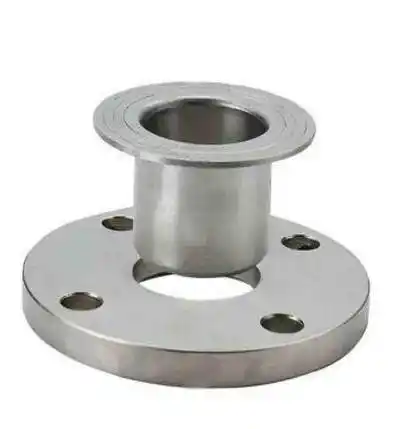
Lap joint flange (LJ)
Consisting of two components: a stub end and a lap joint ring flange. The respective stub end is slid into the flange’s bore, and the stub end is joined to the pipe through butt welding.

Threaded Flanges (TF)
Threaded flanges are pipe flanges with internal threading to match external threads on a pipe.
Author: Lewis Liu
Hello, my name is Lewis Liu, and I’m a professional sales engineer with over a decade of expertise in the flange fittings sector.
I am quite informed about flange selection, installation, and maintenance. I am passionate about providing customers with the greatest solutions for keeping their pipeline systems running smoothly, safely, and dependably.
If you have any queries or concerns concerning flange fittings for your pipelines, whether they are about selection, material choice, specification requirements, or anything else, please contact me at any time. I am dedicated to providing expert advice and assistance to help you make educated decisions and reach your objectives.