How to Extend the Lifespan of Flanges?
Pipeline flanges are key components in a pipeline system. The lifespan of flanges directly affects the safety, stability, operational efficiency, and construction costs of the overall system, and is a point that needs to be addressed with special care. The lifespan of flanges is affected by multiple factors, such as installation details, maintenance details, environmental characteristics, material types, and even mechanical stress, all of which can have varying degrees of impact on the lifespan of flanges. This article will introduce how each factor affects the lifespan of flanges one by one, as well as key practices for extending the lifespan of flanges.
Major Factors Influencing the Life of the Flange
Corrosive environment
Wet environments containing large amounts of chemical corrosives are very bad for flanges, and flanges can develop serious corrosion when exposed to wet or chemical corrosive media for long periods. Carbon steel flanges have a lifespan of about 10–15 years under normal industrial conditions; but only 5–8 years in harsh corrosive environments.
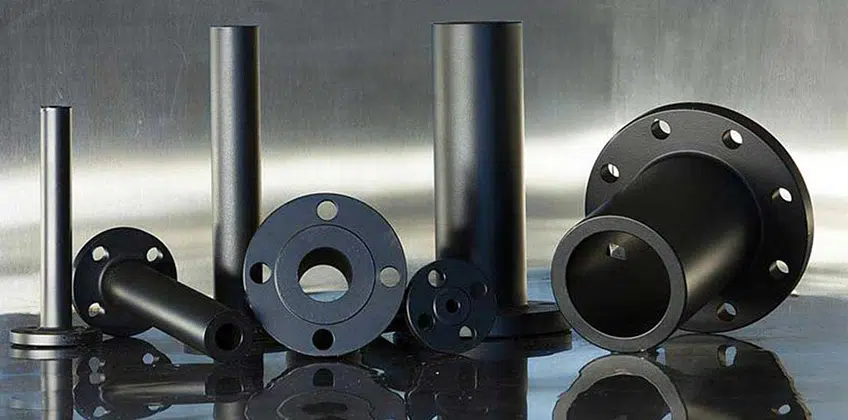
If the installation environment contains hydrogen sulphide (H2S) or chloride, the unprotected carbon steel flanges will only last 3-5 years; if it‘s in a seawater environment, the unprotected carbon steel flanges will only last 5-8 years. In similar environments containing corrosive substances and high humidity, it‘s best to use 316L or duplex stainless steel materials (stainless steel has stronger corrosion resistance and can last up to 20-30 years under industrial conditions). The appropriate materials will greatly extend the flange‘s lifespan.
Installation and alignment
The bolt preload and the accuracy of flange alignment during installation have a significant impact on the service life. Tight bolts can cause flange deformation and damage to the sealing surface, while loose bolts can cause leakage and accelerate corrosion. It is recommended to tighten the bolts evenly in a diagonal sequence according to the ASME PCC - 1 specification, and control the torque within a tolerance range of ± 10%. Meanwhile, if the flange misalignment exceeds 1 °, local stress will be concentrated, resulting in a shortened lifespan of approximately 30% -50%. Therefore, during installation, it is necessary to repeatedly check whether the flange surface is flat and aligned to avoid uneven stress.
Temperature and Pressure
High temperature environments reduce flange material performance, accelerating creep and oxidation. When ambient temperatures exceed 350°C, carbon steel flanges may experience creep failure; when ambient temperatures exceed 600°C, stainless steel flange is prone to oxidation.
Moreover, frequent pressure fluctuations also cause fatigue damage, for example, ±10% pressure fluctuations in the Class 300 flange system can reduce fatigue lifespan by about 40%.
Therefore, for high temperatures or high pressure and fluctuating conditions, high-temperature-resistant alloys should be chosen and the corresponding compensation design adopted.
Flange types and designs
The structure of flanges also greatly affects lifespan.
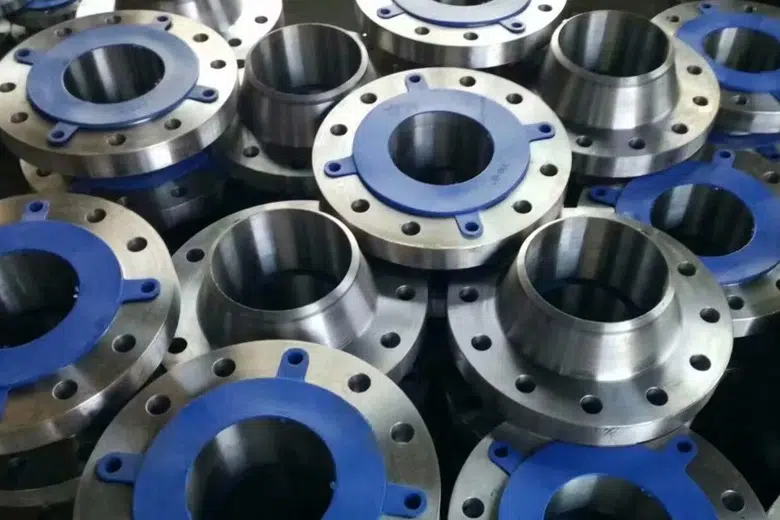
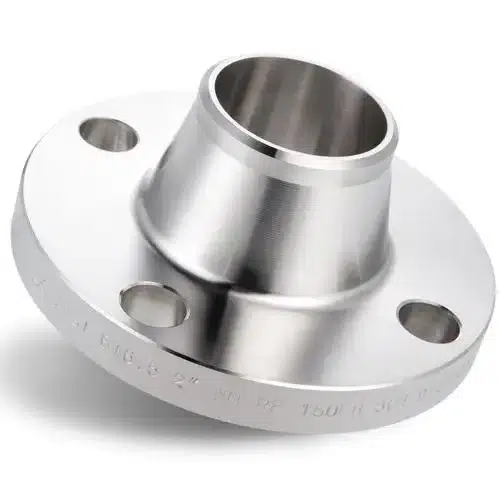
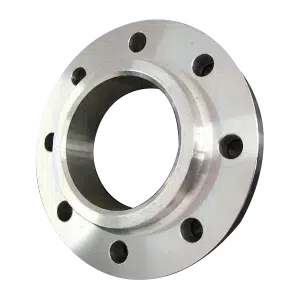
Under the same conditions, Weld Neck flanges are more uniformly subjected to force and more resistant to fatigue, with a fatigue lifespan typically several times that of Slip-On flanges; whereas slip-on or threaded flanges tend to have a shorter lifespan under high pressure.
Therefore, high-strength structures such as Weld Neck flanges should be prioritized in practical applications.
Inadequate maintenance
Daily inspection and maintenance steps are very important. If these daily steps are frequently neglected, then small problems will accumulate into many, eventually turning into severe failures that are difficult to bear. Regular external inspection can detect early signs of corrosion, such as rust, dents, and so on as early as possible. Timely cleaning and re-covering the anti-corrosion coating can prevent corrosion from further spreading and leaks from appearing.
Maintenance requires a specific execution plan and is executed strictly according to the plan, such as checking and tightening the bolts every six months, and performing non-destructive testing such as ultrasound or radiation every two years. Well-maintained flanges can remain tightly sealed to avoid sudden leaks, thereby reducing downtime and improving system reliability.
Correct Installation and Transportation
- Preparation before installation: The flange contact surface and fasteners must be cleaned thoroughly before installation to ensure that there is no dust, rust, or residual old sealant; Apply an appropriate amount of lubricant on the contact surface between the bolt thread and nut to ensure accurate torque transmission. The gasket should be made of materials recommended by the manufacturer and placed with the center aligned.
- Tightening method: Use diagonal cross sequence to tighten the bolts, gradually and evenly apply force in multiple steps to avoid over tightening at once. Torque wrenches or extension bars can be used to achieve the specified torque value, and controlled within a tolerance of ± 10%. After completion, re measure the torque of all bolts to ensure that there is no looseness.
- Alignment check: The flange alignment must be repeatedly checked during the installation process. Use tools such as straightedges or alignment instruments to confirm that the two flange faces are parallel and perpendicular to the center of the pipeline. If necessary, use metal shims to correct deviations and prevent sealing surface warping.
- Transport and storage: Flanges should be stored in a dry and clean environment, avoiding prolonged exposure to humid air or corrosive gases. When transporting, lifting lugs and hooks can be used. Do not directly hit or scratch the sealing surface with hard objects to avoid scratching the surface. If possible, it is best to cover the flange surface with a dust cover or plastic bag to prevent debris from falling in. Finally, it is necessary to ensure stability during transportation to avoid flange dropping and deformation.
Material selection and anti-corrosion
Material comparison
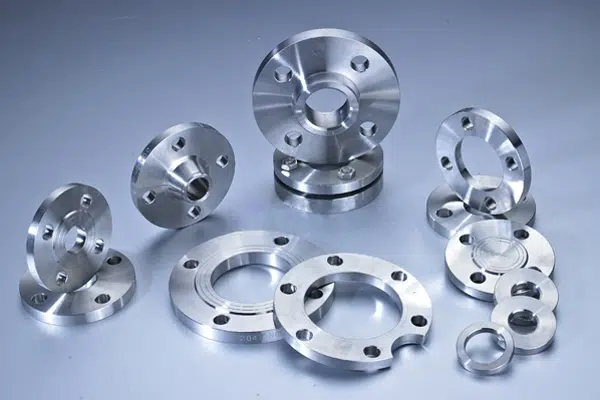
- Carbon steel flanges have low cost and good mechanical properties, but poor corrosion resistance, requiring painting, coating or protective coating;
- Stainless steel flanges have strong corrosion resistance and are not easy to rust, but the cost and post-processing expenses are relatively high.
- According to the working conditions, alloy steel or nickel based high-temperature alloys can be selected: for example, Inconel series flanges maintain strength even at extreme high temperatures and can withstand high temperature environments of about 1200 ° C. They are suitable for harsh environments such as petrochemicals and high-temperature gases.
- In addition, for special chemical media, polytetrafluoroethylene (PTFE) lining or epoxy lining flanges can be used to provide additional corrosion barriers for metal flanges.
anti-corrosion treatment
For carbon steel or low-alloy flanges, coatings or plating are usually used to delay corrosion. For example, the epoxy zinc rich primer combined with polyurethane topcoat system can extend the service life of carbon steel flanges by several years. For buried pipelines, cathodic protection facilities can be installed to increase the flange lifespan to over 20 years. In recent years, a new type of viscoelastic anti-corrosion material has been applied in flange anti-corrosion. This type of material can maintain elasticity and sealing for more than 30 years, and has excellent self-healing ability. It can form a durable protective layer at flange gaps, significantly reducing the risk of leakage and achieving excellent results.
Economic considerations
Although the initial cost of high alloy materials and advanced coatings is relatively high, they can significantly reduce the frequency of replacement and maintenance downtime, and extend the system life cycle, which can significantly reduce the total cost and is a high-quality choice that conforms to long-term principles.
Regular maintenance and testing
routine inspection
Operators should regularly observe the exterior of the flanges to check if have anomalies like rust spots, dents, welding cracks and so on. If found abnormalities such as gasket leakage or flange bulging, should immediately stop operation to make investigation. The flange surfaces need regularly cleaning to remove dirt and water accumulation, so can effectively prevent local corrosion caused by chemicals or impurities.
Tightening status check
In environment with temperature cycling or vibration, bolts maybe become loose. It is suggested to recheck the bolt torque of important systems every 6 months, and re-tighten or replace gasket if necessary. Proper bolt preload can avoid leakage happen.
Non-destructive testing
It is suggested to carry out non-destructive testing like ultrasonic (UT) and radiographic (RT) every 1-2 years for critical flanges and the parts which had failure before, to judge whether have cracks, corrosion, or material thinning inside the flanges.
Professional maintenance team
Above maintenance and inspection work should be done by experienced engineers or technicians. They can make repair plan according to inspection result, such as re-polishing the sealing surface, repair weld defects or replace gasket, etc. Regular, clear and precise maintenance record can help understand the condition of flanges and predict the replacement cycle.
Maintenance Effects
Regular maintenance can ensure the flanges in good sealing condition, reduce sudden leakage and accidents happen. Well maintained pipeline system have lower failure rate and more reliable operation, also can reduce maintenance cost and downtime.
Replacement and Recycling
Even take above measures, the flanges still will reach service limit after long time use. When find severe corrosion, fatigue cracks, or cannot repair deformation on the flanges’ sealing surfaces, should replace in time. New flanges should be purchased from qualified manufacturer, keep same model and material with original system, and meet correct pressure rating. Removed old flanges and gaskets should be recycled according to environmental regulations, to realize maximum metal reuse and avoid environmental problem caused by direct disposal.
Conclusion
The lifespan of flanges depend on many factors such as material, design, installation, working condition and maintenance. Using high quality material, improve anti-corrosion measures, strictly follow specification for installation, and do regular maintenance check, these steps can greatly extend the lifespan of flanges, and ensure safe and stable operation of pipeline system. Do not ignore these necessary work just for small cost saving or short-term benefit, otherwise will cause frequent failures and even serious safety problem.
Other Types of Flanges

Weld Neck Flanges (WN)
WN flange, also known as a trapped hub flange or high-hub flange, is a high-stress-containing flange.

Slip-on Flanges (SO)
Slip-on flanges, as the name shows, can be easily slipped onto the end of a pipe or fitting and then welded in place.

Socket Weld Flanges (SW)
Socket Weld Flanges (SW) are similar to Slip-on Flanges (SO). The difference is that there is an extra piece in the middle.

Blind Flanges (BF)
Blind flange is also called flange cover. It is a flat, circular plate used to cover the ends of pipes, valves, or joints.
Lap joint flange (LJ)
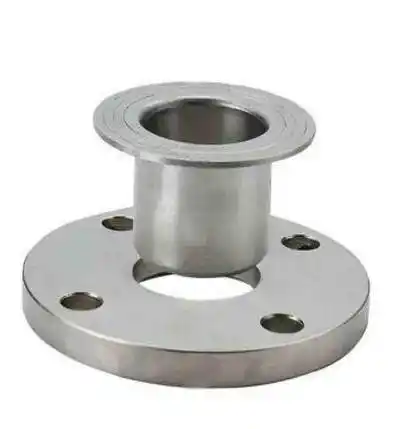
Consisting of two components: a stub end and a lap joint ring flange. The respective stub end is slid into the flange’s bore, and the stub end is joined to the pipe through butt welding.

Threaded Flanges (TF)
Threaded flanges are pipe flanges with internal threading to match external threads on a pipe.
Author: Lewis Liu
Hello, my name is Lewis Liu, and I’m a professional sales engineer with over a decade of expertise in the flange fittings sector.
I am quite informed about flange selection, installation, and maintenance. I am passionate about providing customers with the greatest solutions for keeping their pipeline systems running smoothly, safely, and dependably.
If you have any queries or concerns concerning flange fittings for your pipelines, whether they are about selection, material choice, specification requirements, or anything else, please contact me at any time. I am dedicated to providing expert advice and assistance to help you make educated decisions and reach your objectives.