Does the Type of Flange Affect Its Price? Exploring Factors that Influence Flange Pricing
Yes, flange type affects its price. But it is not the only thing, and sometimes it is not even the biggest thing. Material, size, pressure class, facing, machining, inspection, order quantity, and delivery cost can all change the final quotation.
At YANHAO, customers often ask us a simple question: “Which flange is cheapest?” The honest answer is: it depends on the full specification. A slip-on flange may have a lower unit price than a weld neck flange in some standard orders. However, after welding, inspection, maintenance, and service life are included, the lower purchase price does not always mean the lower project cost.
In this guide, we explain how different flange types influence pricing and how buyers can compare quotations in a more correct way. No fixed price list here, because steel markets and project requirements are always changing.

Does Flange Type Affect Price?
Flange type changes the shape of the product. That shape affects how much steel is needed, which forming route is suitable, how many machining steps are required, and how the flange connects to the pipe. These are real production costs, so type naturally enters the price calculation.
For example, a weld neck flange has a tapered hub and a welding end that must match the pipe bore. A blind flange has no center opening, but it is a solid pressure-retaining part. A threaded flange needs accurate internal threads. A lap joint assembly normally includes both a backing flange and a stub end. They are all called “flanges,” but the factory work is not same.
Flange price = raw material + forming + heat treatment + machining + inspection + coating + packing + order and delivery costs
This is a useful way to read a quotation, not a strict accounting formula. Some items may be combined by the manufacturer, and not every flange needs every process. Still, it helps buyers understand why two products with the same nominal size can have different prices.
Weld Neck vs. Slip-On Flange Price: Which One Costs More?
For the same size, pressure class, material, facing, and order conditions, a slip-on flange often has a lower factory price than a weld neck flange. Its shorter and simpler shape usually means less material and less hub machining. But this is a general tendency, not a guaranteed price rule.
Why Weld Neck Flanges Usually Cost More
A weld neck flange has a long tapered hub that transfers stress into the pipe. The hub and welding end add material and machining work. The bore and welding-end details also need to suit the connected pipe, so buyers should provide the pipe schedule or required bore when asking for a price.
Weld neck flanges are commonly selected for demanding pressure, temperature, cyclic, or critical service when required by the design code or project specification. Their higher purchase price may be acceptable because the connection performance is the main concern, not only the flange itself.
Why Slip-On Flanges Can Reduce Purchase Cost
A slip-on flange slides over the pipe and is normally fillet-welded inside and outside where the applicable design requires it. The product is relatively simple and fit-up can be convenient. This makes it a common cost-conscious choice for suitable low-stress and general utility applications.
However, two fillet welds can mean more field welding than the single butt weld used for a weld neck connection. Welding labor, consumables, inspection, and local labor rates can narrow the difference. So we should not only look at the price on one line of the quotation.

💡 Pro Tip
Compare the flange price, installation cost, inspection scope, and expected maintenance together. This is more useful than asking only which flange has the lowest unit price.
Why Is a Blind Flange Sometimes More Expensive?
A blind flange looks simple because it has no hub and no center bore. But it closes the end of a piping system and must resist pressure loads. Its solid body can contain more steel than an open ring-type flange of similar outside dimensions, especially when size and pressure class increase.
The price can therefore be higher than buyers expect from its simple appearance. Material weight, thickness, facing, drilling, and any required tapping or special machining all matter. A tapped blind flange, for example, needs an extra machining operation compared with a plain design.
Socket Weld and Threaded Flange Cost: What Adds to the Price?
Socket weld and threaded flanges are often used in suitable small-bore piping applications. Their cost is influenced by the extra detail in the connection area, not just by the outside diameter.
Lap Joint Flange Price: Why Should You Include the Stub End?
A lap joint connection normally uses a backing flange together with a stub end. If one supplier quotes only the loose flange ring and another supplier quotes the complete assembly, the two prices are not directly comparable. This happens often in purchasing, so the scope needs to be checked first.
In some corrosion-resistant piping designs, the stub end can be made from the alloy needed for fluid contact, while the backing flange may use a different permitted material. This can reduce expensive alloy use, but only when the project specification allows the material combination. Easy bolt-hole alignment and maintenance access may also bring value beyond the initial purchase price.

What Affects Flange Price Besides Flange Type?
If buyers change only the flange type but leave all other details the same, they may see one kind of price difference. In real orders, several details often change together. That is why two quotations can look very different even when both say “6-inch Class 300 flange.”
1. Flange Material and Grade
Carbon steel, stainless steel, alloy steel, duplex steel, and nickel alloys do not have the same raw-material cost or processing behavior. The exact grade matters too. “Stainless steel flange” is not enough information for a firm technical quotation.
Material price can move with the metal market. Availability, starting form, heat treatment, and required documents can also change cost. YANHAO manufactures flanges in carbon steel, stainless steel, and alloy steel, and we confirm the grade before calculating the order.
2. Size, Pressure Class, and Flange Weight
Larger size and higher pressure class often increase outside diameter, thickness, bolt-hole requirements, and product weight. More weight means more raw material, and larger parts may need different machines, handling, tooling, and packing.
One important note: ASME Class 300 does not simply mean a fixed allowable pressure of 300 psi. Pressure-temperature ratings depend on the applicable standard, material group, and temperature. Buyers should not choose a class by price alone.
3. ASME, EN, JIS, or Custom Flange Standards
ASME B16.5 covers pressure-temperature ratings, materials, dimensions, tolerances, marking, and testing for pipe flanges and flanged fittings in its stated size range. Other standards and custom drawings can require different dimensions and manufacturing controls.
A custom flange may need drawing review, special tooling, sample confirmation, or a separate production setup. Standard repeat products are usually easier for the factory to plan. Custom work is still very normal for us, but its cost must be calculated from the actual drawing.
4. RF, FF, and RTJ Flange Facing
Raised face, flat face, and ring-type joint facings do not require exactly the same machining. An RTJ groove needs controlled geometry and a suitable surface finish for the metal ring gasket. Special facings, serration requirements, and tighter finish requirements can add machining and inspection time.

5. Forging, Heat Treatment, and Machining
The required manufacturing route affects energy, equipment, material yield, and production time. Heat treatment may be required by the material specification or purchase order. Machining cost rises when the design includes special bores, grooves, threads, close tolerances, or extra drilled holes.
More processing is not automatically better for every application. The correct process is the one required by the standard, material, design, and service condition. Saving cost by removing a required step is not real saving.
6. Inspection, Testing, and Certification
Basic dimensional inspection and additional project testing are different cost scopes. Extra requirements may include positive material identification, ultrasonic testing, magnetic particle testing, liquid penetrant testing, hardness testing, impact testing, corrosion testing, or third-party inspection.
Document requirements also matter. If the order needs an EN 10204 3.1 certificate, detailed inspection reports, heat-treatment records, or special traceability, state this before quotation. It is better than adding them after production starts.
7. Quantity, Coating, Packing, and Delivery
Larger repeat quantities can spread setup and programming work across more pieces. Small mixed orders may need several setups and more handling per unit. Urgent delivery can also change production planning and shipping cost.
Anti-rust oil, paint, galvanizing, pickling, passivation, special marking, export wooden cases, and reinforced packing should be clearly listed. Freight terms and destination must also be checked. EXW, FOB, and CIF quotations do not include the same delivery scope, so the numbers cannot be compared without reading the terms.

How to Get an Accurate Flange Price from a Manufacturer
A complete RFQ helps the manufacturer quote faster and reduces later changes. If some details are not decided, tell us your service conditions and project standard. We can check the requirement with you, but the final selection should follow the responsible piping design and applicable code.
RFQ example: WN flange, ASME B16.5, NPS 6, Class 300, ASTM A105, RF, SCH 40 bore, 200 pcs, black paint, EN 10204 3.1 certificate, delivery term and destination to be confirmed.
⭐ Important: Before choosing the lowest quotation, confirm that every supplier is pricing the same type, standard, material, class, facing, testing scope, quantity, and delivery terms. A cheaper offer may simply include fewer requirements.
Is the Cheapest Flange the Best Choice for Your Project?
Not always. A flange must first be suitable for the piping design, pressure-temperature condition, material compatibility, facing, and installation method. After these requirements are met, buyers can compare cost between acceptable options.
A lower-priced flange that causes fit-up problems, extra welding, failed inspection, leakage, or early replacement can cost more in the end. On the other hand, choosing an expensive high-specification flange for a simple non-critical line may also waste budget. Right selection is the balance, not blindly high or low.
Flange Price FAQ
Which Type of Flange Is Usually the Cheapest?
Slip-on flanges often have competitive unit prices in suitable standard applications, but there is no universal cheapest type for every size and class. Material weight, manufacturing route, quantity, and market conditions can change the result. Always compare complete and equivalent specifications.
Why Does a Weld Neck Flange Cost More Than a Slip-On Flange?
Its tapered hub, additional material, welding-end geometry, and machining usually add production cost. The exact difference depends on size, class, material, bore, quantity, and the supplier’s manufacturing route.
Can I Estimate Flange Price Only by Weight?
Weight helps estimate raw-material use, but it does not cover the whole price. Machining, threads or grooves, heat treatment, testing, documents, coating, packing, and order quantity can make two similar-weight flanges cost differently.
Does Flange Price Include Installation?
Normally, a manufacturer’s product quotation does not include site installation unless it is separately agreed. Welding, gaskets, bolts, labor, inspection, commissioning, and maintenance should be considered when calculating the total installed cost.
Get a Clear Flange Quotation from YANHAO
YANHAO is a flange and pipe fittings manufacturer in Hebei, China. We produce weld neck, slip-on, blind, socket weld, threaded, and lap joint flanges in carbon steel, stainless steel, and alloy steel. Standard products and drawing-based customization are both available.
Send us your flange list, drawing, or basic service requirements. We will check the specification and quote according to the actual material, process, inspection, quantity, and delivery scope. This makes the price more clear, and also avoids many later troubles.
Technical References
Other Types of Flanges

Weld Neck Flanges (WN)
WN flange, also known as a trapped hub flange or high-hub flange, is a high-stress-containing flange.

Slip-on Flanges (SO)
Slip-on flanges, as the name shows, can be easily slipped onto the end of a pipe or fitting and then welded in place.

Socket Weld Flanges (SW)
Socket Weld Flanges (SW) are similar to Slip-on Flanges (SO). The difference is that there is an extra piece in the middle.

Blind Flanges (BF)
Blind flange is also called flange cover. It is a flat, circular plate used to cover the ends of pipes, valves, or joints.
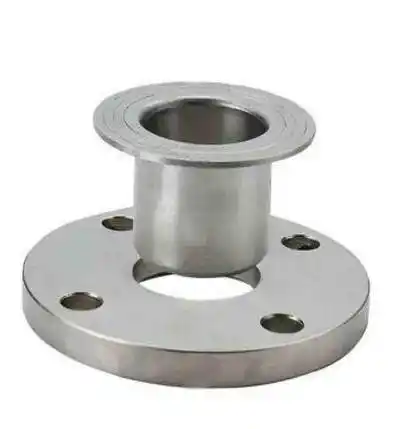
Lap joint flange (LJ)
Consisting of two components: a stub end and a lap joint ring flange. The respective stub end is slid into the flange’s bore, and the stub end is joined to the pipe through butt welding.

Threaded Flanges (TF)
Threaded flanges are pipe flanges with internal threading to match external threads on a pipe.
Author: Lewis Liu
Hello, my name is Lewis Liu, and I’m a professional sales engineer with over a decade of expertise in the flange fittings sector.
I am quite informed about flange selection, installation, and maintenance. I am passionate about providing customers with the greatest solutions for keeping their pipeline systems running smoothly, safely, and dependably.
If you have any queries or concerns concerning flange fittings for your pipelines, whether they are about selection, material choice, specification requirements, or anything else, please contact me at any time. I am dedicated to providing expert advice and assistance to help you make educated decisions and reach your objectives.