
How Does the Size and Thickness of the Flange Influence Its Price?

1. Introduction
If you have ever requested a quote for flanges, you know the price can swing wildly from one spec to another. Two flanges that look nearly identical might differ in cost by 300% or more. Why?
We manufacture flanges for oil & gas, petrochemical, and power generation projects daily. Here is what we see on the shop floor: size and thickness are the two biggest cost drivers in flange pricing. They determine exactly how much steel goes into the part, how many hours it spends on the machine, and what it costs to ship it to your site.
Buyers comparing quotes, engineers writing specs, project planners watching the budget — understanding these two factors helps you avoid over-specification and stops you paying for material and machining you do not need.
2. What Affects the Price of a Flange?
Before getting into size and thickness, here is the full picture. Several factors drive flange pricing:
Size and thickness hit the biggest cost bucket directly: raw material. Material is 60-70% of a flange’s final price. Double the diameter or increase wall thickness, and you see it immediately in the material line.
3. How Flange Size Influences Price

3.1 Outer Diameter and Overall Dimensions
A 24-inch flange does not use twice the material of a 12-inch. It uses roughly four times as much. Material volume scales with the square of the diameter. A larger flange simply eats more steel.
A standard Class 150 weld neck flange in 2-inch size weighs about 2.5 kg. The same flange in 24-inch weighs over 95 kg. Nearly 40 times the raw material for one piece. The machining scales too. More surface to turn, more bolt holes, longer facing operations. Every extra inch of diameter adds minutes to the cycle time. Sometimes hours.
3.2 Bore Size and Pipe Compatibility
The bore diameter must match the pipe. Obvious, but the cost matters. Small sizes (1/2 inch to 4 inch) use little material and come from standard bar stock.
At 12-inch and above, you need large-diameter forgings or ring-rolled blanks. Harder to source, more expensive per kilo, longer lead times. The supply chain alone adds cost before the first cut.
3.3 Weight and Material Consumption
Weight is the simplest proxy for flange cost. Heavier flanges mean more raw material. The steel billet or forging blank is the single biggest line item. They also mean higher shipping cost: a pallet of 6-inch flanges might weigh 80 kg, while a pallet of 24-inch flanges can exceed 1,000 kg, multiplying freight costs. Large flanges need cranes or forklifts. More logistics headaches.
On project bids, we see shipping costs become a major line item on large-diameter flanges, especially for international deliveries.
3.4 Tooling and Machining Complexity
Big flanges need big machines. Our shop has lathes that swing 60-inch diameter. Not every manufacturer does. That specialized equipment is a major capital investment, and the cost shows up in the per-piece price.
Large flanges also have more bolt holes (often 20, 24, or more), larger sealing surfaces, and tighter flatness requirements. A facing operation that takes 5 minutes on a 4-inch flange might take 45 minutes on a 36-inch. More machine time, higher cost.
4. How Flange Thickness Influences Price

4.1 Thickness and Structural Strength
Thickness is engineered for a reason. It withstands specific pressure and mechanical loads. A thicker flange handles higher bolt preload, greater internal pressure, and cyclic loading without deformation.
On our shop floor, thicker walls mean one thing above all: more kilograms of steel. They also need deeper cuts, more machining passes, and sometimes larger forging equipment to get proper deformation through the full cross-section.
A Class 600 flange is much thicker than Class 150 at the same size because it must contain higher pressure. The extra thickness is safety margin, and it is necessary. But know what you are paying for.
4.2 Thickness and Weight Increase
Thickness, like diameter, piles on weight. On a weld neck flange, the neck, hub, and ring all add mass. A 20% increase in design thickness can push total weight up 25-30%.
That extra weight hits everything downstream. More material to buy, longer machining cycles, more energy in heat treatment, more surface area to coat, higher freight bills.
4.3 Pressure Rating Requirements
Pressure class is the specification that most directly drives thickness. In the ASME B16.5 standard:
Class 600 instead of Class 300 means more material, more machining, and usually tougher quality control. The price tag shows it.
4.4 Manufacturing Difficulty
Thick flanges present real manufacturing challenges:
5. The Combined Effect of Size and Thickness
Size and thickness do not just add up. They multiply.
A small, thin flange (2-inch, Class 150) is simple. Little material, quick machining, cheap shipping. A large, thick flange (24-inch, Class 600) is a different beast entirely. Hundreds of kilograms. It can tie up a machine tool for a full shift and needs specialized handling at every step.
Here are real numbers from our production floor, A105 carbon steel weld neck flanges:
Cost Comparison Table
2″ Class 150 = 1x baseline | 6″ Class 150 = 4.5x material | 6″ Class 600 = 9.3x material | 24″ Class 150 = 79x material | 24″ Class 600 = 175x material
⚠️ Note: Actual prices vary by material grade, standard, and market conditions. Contact us for current pricing.
The jump from a small standard flange to a large high-pressure one can mean a 100x cost increase. Get the spec wrong, and your flange budget explodes. Get it right, and you hit your performance target without burning cash.

6. Other Factors That Interact With Size and Thickness
Size and thickness do not operate alone. Other factors affect their cost impact:
Material Grade
A 12-inch Class 300 flange in A105 carbon steel costs roughly 40% less than the same spec in 316 stainless steel. In duplex stainless, the multiplier hits 3-4x. As size increases, that gap widens in absolute dollar terms.
Flange Standard
ANSI/ASME B16.5, B16.47, DIN 2501, JIS B2220, and EN 1092-1 all define different dimensions for the same nominal size. Some standards run heavier on wall thickness than others.
Pressure Class
Higher classes need thicker walls. The standards codify the relationship, and the price follows.
Surface Finish and Face Type
Raised face, flat face, and ring-type joint have different machining requirements. RTJ grooves on large, high-pressure flanges need precise machining. That precision costs money.
Order Quantity
One-piece orders of large, thick flanges sting because setup costs land on a single piece. Runs of 50 or 100 drop the unit price significantly. Custom dimensions outside standard tables add engineering and tooling costs.
7. Practical Examples of Price Differences
Three scenarios from our quoting desk:
💡 Example 1 — Small vs. Large
A buyer needed weld neck flanges for a water distribution system. They specified 20-inch Class 150 to match the main header. We reviewed the project and suggested splitting into two 12-inch lines instead. The two smaller flanges cost roughly 60% of the single 20-inch, and they were in stock. No 6-week forging lead time.
💡 Example 2 — Standard Pressure vs. Over-Specified
A chemical plant buyer requested 4-inch Class 600 flanges for a line running at 150 psi and 200°F. The application needed Class 150 at most. Class 600 would have cost 2.8x more and added weight to the piping. We recommended down-rating. Saved them about $4,200 on a 40-piece order.
💡 Example 3 — Thickness Standard vs. Custom
A power plant needed thick flanges for a custom heat exchanger with an unusual bolt circle. Machining from solid oversized forgings was the obvious route, but expensive. We worked with the engineer and used standard B16.5 Class 900 flanges with modified facing instead. All mechanical requirements met. Roughly half the cost of full custom fabrication.
8. Tips for Choosing the Right Flange Without Overspending
Our engineering team’s recommendations:
Select the Right Size for the Pipe System
Do not oversize the flange “just to be safe.” Match the nominal pipe size to the bore requirement. Upsizing by one nominal size adds material cost with zero functional benefit — you are literally paying for steel you do not need.
Avoid Unnecessary Thickness
Specify the pressure class based on actual maximum operating pressure, not theoretical maximums. If your system runs at 200 psi, Class 150 carbon steel (rated 285 psi at ambient) handles it fine. Do not default to Class 300 because “that is what we usually use.” That habit costs money.
Match Pressure and Temperature Requirements
Pressure ratings drop as temperature rises. A Class 150 carbon steel flange rated for 285 psi at 100°F falls to 180 psi at 400°F. Many engineers forget this derating and overspecify. Check the pressure tables in ASME B16.5 before you commit.
⚠️ Temperature Derating Trap: Many engineers specify Class 300 at elevated temperature when Class 150 would handle the actual pressure. Check the pressure-temperature rating table before you lock the spec.
Compare Standard Sizes Before Choosing Custom
Always check if a standard B16.5 or EN 1092-1 flange meets your needs. Custom bolt circles, special facings, or non-standard thicknesses add engineering time and tooling costs. Standard flanges are mass-produced, kept in stock, and cheaper.
Do Not Over-Engineer
The right flange meets the mechanical and safety requirements at a reasonable cost. Talk to your supplier about cost implications before locking the spec. Five minutes of conversation can save thousands.

9. Conclusion
Size and thickness drive flange cost more directly than any other factors. Larger diameters increase material consumption, machining time, and shipping weight. Greater thickness adds strength but multiplies material volume and manufacturing complexity. Combine the two — large diameter plus heavy wall — and costs compound fast.
Bottom line: Specify exactly what the application requires, and no more.
A correctly sized flange at the right pressure class is the most cost-effective choice. Over-specification burns budget without adding value. Under-specification risks failure and expensive downtime.
Unsure about the spec? Talk to your manufacturer early in the design phase. A five-minute conversation often identifies cost savings in the thousands, without cutting corners on safety.
Other Types of Flanges

Weld Neck Flanges (WN)
WN flange, also known as a trapped hub flange or high-hub flange, is a high-stress-containing flange.

Slip-on Flanges (SO)
Slip-on flanges, as the name shows, can be easily slipped onto the end of a pipe or fitting and then welded in place.

Socket Weld Flanges (SW)
Socket Weld Flanges (SW) are similar to Slip-on Flanges (SO). The difference is that there is an extra piece in the middle.

Blind Flanges (BF)
Blind flange is also called flange cover. It is a flat, circular plate used to cover the ends of pipes, valves, or joints.
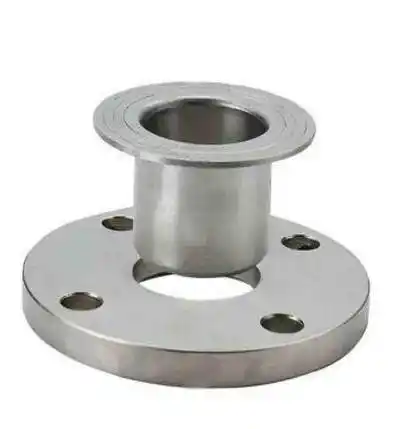
Lap joint flange (LJ)
Consisting of two components: a stub end and a lap joint ring flange. The respective stub end is slid into the flange’s bore, and the stub end is joined to the pipe through butt welding.

Threaded Flanges (TF)
Threaded flanges are pipe flanges with internal threading to match external threads on a pipe.
Author: Lewis Liu
Hello, my name is Lewis Liu, and I’m a professional sales engineer with over a decade of expertise in the flange fittings sector.
I am quite informed about flange selection, installation, and maintenance. I am passionate about providing customers with the greatest solutions for keeping their pipeline systems running smoothly, safely, and dependably.
If you have any queries or concerns concerning flange fittings for your pipelines, whether they are about selection, material choice, specification requirements, or anything else, please contact me at any time. I am dedicated to providing expert advice and assistance to help you make educated decisions and reach your objectives.