What Are the Connection Methods of Flanges?
A Complete Guide from a Flange Manufacturer
In our decades of manufacturing flanges for clients across six continents, one question comes up more than any other: “Which flange connection method is right for my project?” The answer matters. Choosing the wrong connection type can lead to leaks, costly downtime, or even catastrophic failure in high-pressure systems. This guide breaks down every major flange connection method, explains how each one works, and shows you exactly when to use it.

1. Introduction
Flanges do not get much attention until one fails. These flat steel discs sit at the ends of pipes, valves, and pumps, creating a connection point you can take apart when needed. Try building or servicing a pipeline without them. You will not get far.
The connection method determines how the flange attaches to the pipe and how that joint holds up under pressure, heat, and vibration. Pick the right one, and the system runs for decades. Pick the wrong one, and you are dealing with leaks, unplanned shutdowns, or something a lot more expensive.
Flanged connections show up everywhere: oil refineries, chemical plants, power stations, water treatment facilities, offshore platforms, and food processing lines. Each industry has its own demands, and each demand calls for a specific connection approach.
2. What Is a Flange Connection?
A flange connection is straightforward: two flanges face each other, a gasket fills the gap, and bolts squeeze everything together. The result is a sealed joint that holds pressure and stays together under stress. It is mechanical, not magical.
Tighten the bolts, the gasket compresses and fills the tiny surface imperfections on the flange faces. Fluid cannot get through. The bolts supply the clamping force. The flange body carries the mechanical loads. Flange, gasket, and bolts are a team. If one part fails, the joint fails.
Every flange connection has two jobs: seal the fluid and hold the pressure. The gasket does the sealing. The flange and bolts handle the mechanical loads. Different connection types balance these jobs differently, which is exactly why picking the right one matters.
3. Main Connection Methods of Flanges
Six ways to connect a flange to a pipe. None of them are new, they have all been around for decades, and each one exists because someone needed something the others could not give. Here is what we tell customers when they ask which one to use.

3.1 Welded Connection (Weld Neck Flange)
Weld neck flanges have a long, tapered hub that extends from the ring and meets the pipe end. You join them with a full-penetration butt weld. Done right, the pipe and flange become one continuous piece of metal. Stress flows through the taper instead of collecting at the joint, and the bore stays the same diameter as the pipe so nothing interrupts flow.
Advantages
Limitations
Where you see them: Oil and gas pipelines, high-pressure steam, chemical process lines. Anywhere the joint absolutely cannot fail.
3.2 Threaded Connection (Threaded Flange)
Threaded flanges, sometimes called screw flanges, have NPT threads cut into the bore. The pipe screws straight in. No welding, no hot work permits, no fire watch. That is why you see them in places where a welding torch would be a very bad idea.
Advantages
Limitations
Where you see them: Gas distribution, low-pressure utility lines, temporary setups, and anywhere a welding torch is a bad idea.
3.3 Slip-On Connection (Slip-On Flange)
Slip-on flanges have a bore a bit bigger than the pipe outside diameter. The pipe slides right through. You weld the hub on the outside and the bore on the inside, two fillet welds, and the flange is attached. Simple, cheap, and compact.
Advantages
⚠️ Sealing Limitation: Slip-on flanges run about two-thirds the strength of weld neck under pressure. The double fillet weld seals fine at low and moderate pressure, but stress collects at the hub. Push them too hard, and that is where the crack starts.
Where you see them: Cooling water, low-pressure air and gas, fire protection, general plumbing. Places where the pressure is low and the budget is tighter.
3.4 Socket Weld Connection (Socket Weld Flange)
Socket weld flanges are counter-bored so the pipe end fits inside. One fillet weld on the outside holds it. You leave about 1/16 inch of space between the pipe end and the socket bottom. That gap lets the pipe expand when it heats up without cracking the weld.
Advantages
Limitations
Where you see them: Instrument taps, small-bore high-pressure lines, hydraulic systems. Anywhere the pipe is under 2 inches and the pressure is real.
3.5 Lap Joint Connection (Lap Joint Flange)
Lap joint flanges come in two pieces. The stub end gets welded to the pipe and has a rounded lap that forms the sealing face. The flange ring is just a flat disc that slips over the stub end and can spin freely. The ring provides the bolt holes. The stub end provides the seal.
Advantages
Limitations
Where you see them: Systems that come apart often for cleaning or inspection. Lines lined with expensive alloys, where you want the stub end in the alloy but the ring in carbon steel. Anywhere bolt hole alignment is a pain.
3.6 Blind Flange Connection (Blind Flange)
Blind flanges are just solid steel discs, no hole in the middle. Bolt one to a flange face, and the pipe end is sealed. Add a gasket, and it holds pressure. Use it permanently to cap a line, or temporarily while maintenance crews work upstream.
Advantages
Where you see them: End of a pipeline, vessel nozzles, temporary isolation during maintenance, hydrotest endpoints. Also at future expansion points where someone might need to tie in later.
4. Sealing Methods Used in Flange Connections
A perfect flange with a bad seal will leak. The gasket, the bolt load, and the flange face finish all have to work together. Get one wrong, and the other two do not matter.

The Role of Gaskets
Gaskets fill the tiny gaps between flange faces. When you tighten the bolts, the gasket compresses and squeezes into surface imperfections, stopping fluid from escaping. Picking the right material matters. Spiral-wound handles heat. PTFE handles chemicals. Rubber handles water at low pressure. Use the wrong one, and you will know soon enough.
Bolt Tightening and Load Distribution
Tighten in a star pattern, not clockwise. Multiple passes, increasing torque a little each time. A torque wrench is the minimum; hydraulic tensioners are better for large flanges. Overtighten and you crush the gasket. Undertighten and it never seals. Most failures we see are on the loose side, not the tight side.
Flange Face Types
Raised face (RF) puts the gasket on a smaller contact area, which concentrates the compression and seals better. Flat face (FF) spreads the load across the whole surface, which is easier on soft gaskets. Ring-type joint (RTJ) has a precision groove that bites into a metal ring gasket. That seal holds at pressures and temperatures that would destroy anything else. Match the face type to the gasket, and both to the service. Get that wrong and nothing else matters.
💡 Pro Tip
Check the flange face finish before you install anything. Too smooth, and the gasket slips. Too rough, and the gasket cannot seat properly. For raised face flanges, aim for 125 to 250 microinches RA. Outside that range, expect problems.
5. Factors That Affect the Choice of Connection Method
We have seen slip-on flanges spec’d for 600 psi steam lines. We have seen threaded flanges on 8-inch pipes. Both failed. Here is what you should actually look at before you pick a connection type.

6. Advantages and Disadvantages of Each Method
We spend a lot of time advising clients on which type to use. Here is how the six methods stack up when you look at what actually matters on site.
Strength Comparison
Weld neck is the strongest. The tapered hub lets stress flow from pipe to flange as if they were one piece. Socket weld comes next, but only for small pipes. Slip-on and lap joint handle moderate pressure fine; just do not push them into severe service. Threaded connections are only as good as the threads cut into them. And blind flanges are not really in the same conversation, they block flow, they do not carry it.
Cost Comparison
Slip-on wins on material cost, it uses less steel. Threaded saves on welding labor, which adds up on jobs with dozens of small connections. Lap joint lets you buy a cheap carbon steel ring even when the stub end is Inconel. Weld neck is the most expensive to buy and install, but we have never heard a client complain about the price after ten years of leak-free service. Socket weld and blind sit somewhere in between.
Installation Ease
Threaded is fastest. Screw it in, tighten, move on. Slip-on comes next: slide over the pipe, weld inside and out. Lap joint makes bolt alignment easy because the ring spins freely on the stub end. Blind flanges are just bolting a disc to a flange face, not much to it. Socket weld needs the pipe inserted to exactly the right depth, with that 1/16 inch expansion gap. Weld neck takes the most time and the best welder: bevel the pipe, align it perfect, lay down a full-penetration weld, then inspect it.
Maintenance Considerations
Lap joint and threaded are your friends if you take things apart often. Blind flanges go on and off all the time by design. Slip-on can be cut off in a pinch, though you are buying a new flange. Socket weld and weld neck are meant to stay put. Removing them means a grinder and a re-weld.
7. Common Applications of Flange Connection Methods
Each industry pushes flanges in its own direction. Here is what we see in practice.
Oil and Gas
In oil and gas, pressure is the deciding factor. Weld neck dominates high-pressure hydrocarbon lines because nothing else gives the same confidence. Blind flanges seal off sections for maintenance. Lap joint shows up on large low-pressure lines where getting the bolt holes to line up is half the battle.
Chemical Processing
Chemical plants push flanges hard. Hot acids, caustic streams, thermal cycling, it adds up. Weld neck and socket weld handle most of it. Lap joint makes sense when the pipe is Hastelloy or titanium and you do not want to pay alloy prices for the whole flange. One leak in a chemical plant can shut down a unit for days, so sealing is not something you compromise on.
Water Treatment
Water and wastewater plants run at moderate pressure, and the budgets are always tight. Slip-on flanges are the default. A raised face with a rubber gasket costs next to nothing and seals fine at 150 psi. No one is running high-pressure steam through a clarifier line.
Power Generation
Power plants are hard on flanges. Steam at 600°F cycles on and off all day. Every thermal cycle stresses the joint. Weld neck is the standard for main steam lines because it handles that cycling better than anything else. Socket weld works for instrument taps and small auxiliary lines. The welding has to be right, a bad weld in a power plant does not just leak, it puts people at risk.
Marine and Offshore Systems
Offshore is a tough environment. Salt spray, limited space, and the cost of sending a replacement part by helicopter. Weld neck handles the process lines. Blind flanges isolate equipment for work. Duplex stainless steel is popular because regular carbon steel rusts fast out there. Weight matters too, every pound on a platform costs money to support.
Food and Pharmaceutical Industries
Food and pharma have a different problem: bacteria love crevices. Any gap that cannot be cleaned is a contamination risk. Most sanitary systems use clamp-style fittings instead of flanges for this reason. When flanges do show up, they are almost always 316L stainless with polished surfaces. Regular raised face flanges are too rough for this world.
8. Installation and Maintenance Considerations
Even a top-grade flange will leak if you botch the installation. We have seen Class 600 weld necks fail because someone rushed the bolt-up. Here is what actually matters in the field.

Proper Alignment
The faces need to be parallel, and the bolt holes should line up without forcing. If you are pulling the flanges together with a come-along, stop and figure out what is wrong. Misalignment puts bending stress on the gasket, and no gasket is designed to handle that. Use alignment pins or temporary bolts to hold everything in place before you start the final torque.
Bolt Tightening Sequence
Tighten bolts in a star pattern, never clockwise around the flange. Make several passes, adding torque each time, rather than cranking each bolt to full torque in one shot. That keeps the faces parallel while the gasket compresses. Skip this step, and you will almost certainly be back to fix a leak.
Gasket Selection
Pick the gasket for the actual service, not for what is in stock. Spiral-wound with inner and outer rings covers most hydrocarbon and steam lines. PTFE sleeves protect fiber gaskets from chemical attack. And do not reuse a gasket. Once it has been compressed, the memory is gone. It will not seal a second time.
Inspection for Leaks
After bolt-up, check the joint with leak detection fluid or ultrasonic testing. Hit it again after the first thermal cycle. Most gasket failures happen during that first heat-up and cool-down. Write down the torque values, gasket type, and date. Six months later when someone asks why it is leaking, that piece of paper saves hours of guessing.
Maintenance Best Practices
Re-torque after the first thermal cycle, then check again on whatever schedule makes sense for the service. Hot, cycling lines need more frequent checks than cold water lines. Replace the gasket every time you take a joint apart, period. Keep spare flange assemblies on the shelf for critical lines; you do not want to wait six weeks for delivery when a pump seal fails at 2 AM. And inspect the flange face before you bolt it back together. A nick or scratch that looks minor to you is a leak path to the gasket.
9. Conclusion
Six methods, one job: connect pipe so it does not leak. Weld neck when you need strength. Threaded when welding is not an option. Slip-on when cost matters most. Socket weld for small high-pressure lines. Lap joint when you are taking things apart regularly. Blind when you need to shut off the end.
There is no single best choice. What works in a refinery at 1500 psi will be overkill in a water treatment plant at 150 psi. Look at your actual operating conditions, your budget, and how often someone will need to take the joint apart. Then pick the method that fits.
Talk to your flange supplier while you are still on the drawing board, not after the pipes are already routed. We have replaced enough failed slip-on flanges that were spec’d for applications that should have used weld neck. Ask questions early. It saves everyone time and money.
💡 Pro Tip
If you are not sure what to pick, go with weld neck. Yes, it costs more. But we have seen too many clients try to save money with slip-on on a high-pressure line, only to pay ten times the savings in downtime and rework. In critical service, the extra cost of a weld neck disappears next to the cost of one unplanned shutdown.
Other Types of Flanges

Weld Neck Flanges (WN)
WN flange, also known as a trapped hub flange or high-hub flange, is a high-stress-containing flange.

Slip-on Flanges (SO)
Slip-on flanges, as the name shows, can be easily slipped onto the end of a pipe or fitting and then welded in place.

Socket Weld Flanges (SW)
Socket Weld Flanges (SW) are similar to Slip-on Flanges (SO). The difference is that there is an extra piece in the middle.

Blind Flanges (BF)
Blind flange is also called flange cover. It is a flat, circular plate used to cover the ends of pipes, valves, or joints.
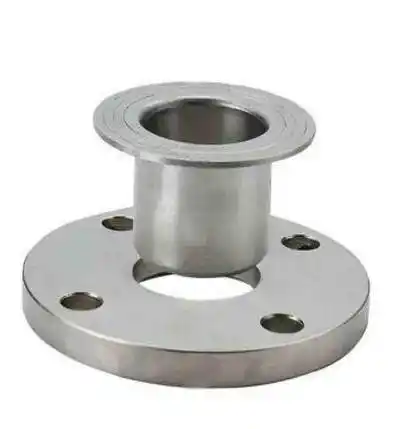
Lap joint flange (LJ)
Consisting of two components: a stub end and a lap joint ring flange. The respective stub end is slid into the flange’s bore, and the stub end is joined to the pipe through butt welding.

Threaded Flanges (TF)
Threaded flanges are pipe flanges with internal threading to match external threads on a pipe.
Author: Lewis Liu
Hello, my name is Lewis Liu, and I’m a professional sales engineer with over a decade of expertise in the flange fittings sector.
I am quite informed about flange selection, installation, and maintenance. I am passionate about providing customers with the greatest solutions for keeping their pipeline systems running smoothly, safely, and dependably.
If you have any queries or concerns concerning flange fittings for your pipelines, whether they are about selection, material choice, specification requirements, or anything else, please contact me at any time. I am dedicated to providing expert advice and assistance to help you make educated decisions and reach your objectives.